



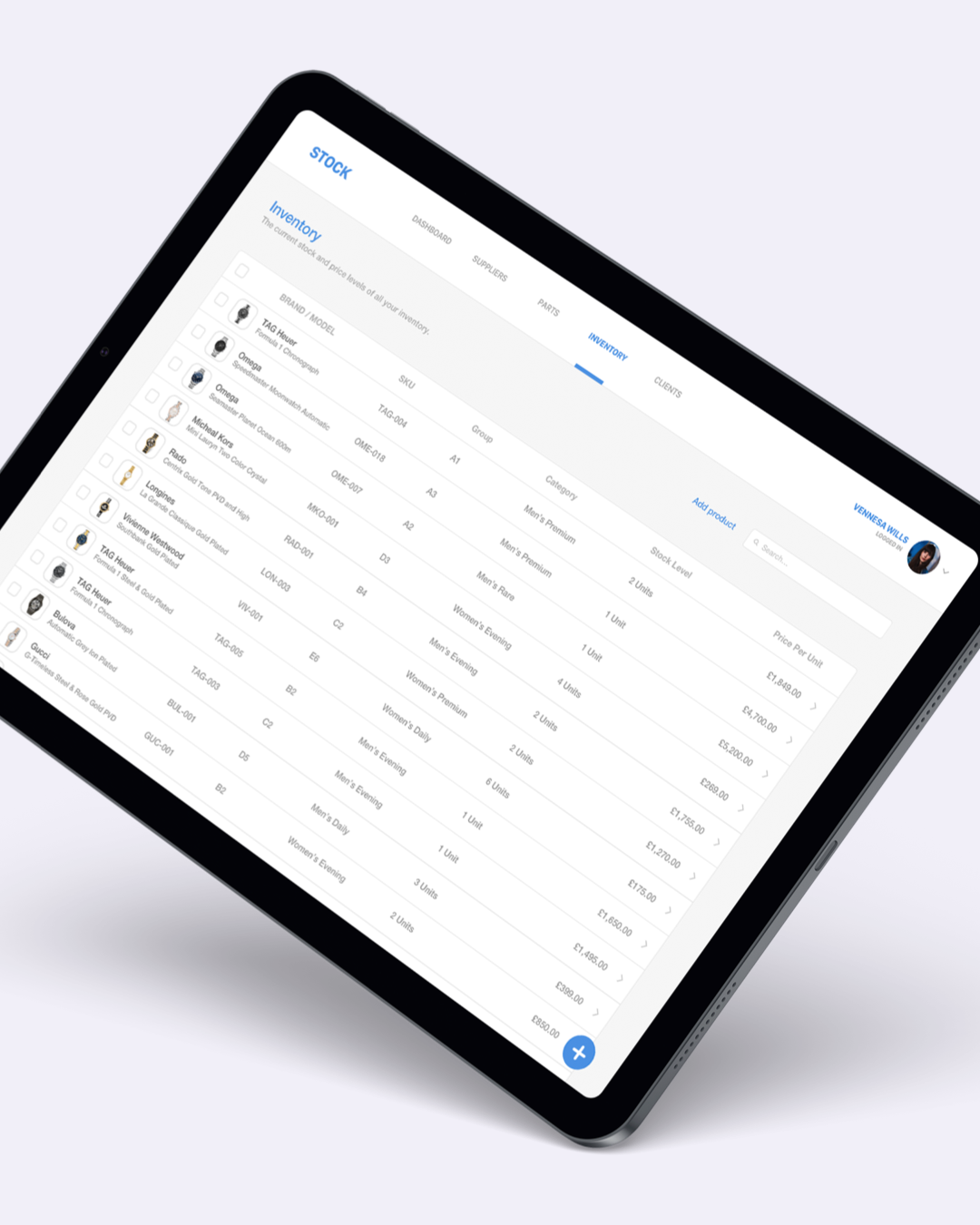
Before Bevl, stock was tracked the way it always had been — on paper. New pieces were logged in a ledger as they arrived, prices were kept on printed lists at the counter and on the phone desk, and anything sold was crossed off by hand, whenever someone had a spare minute to do it. Most of the time that was fine. But paper doesn't update itself the moment something leaves the shop, and the gap between "sold" and "crossed off" was exactly where things started to go wrong.
We built a system the whole team could work from — on the shop floor and at the phone desk. Every piece gets logged with the details staff actually need day to day: brand, model, cost, and where it came from. Stock levels update the moment something sells, so what's on the iPad matches what's in the cabinet. Staff can see at a glance what needs reordering and from which supplier, and attach notes directly to individual pieces — a repair in progress, a customer on a waiting list, anything worth flagging. It runs the same whether someone's stood at the counter or answering the phone.
We used to just hope the paper was right. Now if it says something's there, it's there.
Now, a stock check takes seconds, not a walk to the cabinet and a guess. What's confirmed over the phone matches what's actually on the shelf, because there's no longer a gap between something selling and the record catching up.
As the shop's grown more comfortable with having live stock data on hand, the conversation has shifted toward using that data — simple reporting on what moves fastest and what's overstocked, rather than reacting after the fact.
Thirty minutes, no pitch — bring whatever's breaking, even if it's just a screenshot.
